Logistics & Delivery Terms in PSU Tenders: FOR, Ex-Works, and CIF Explained
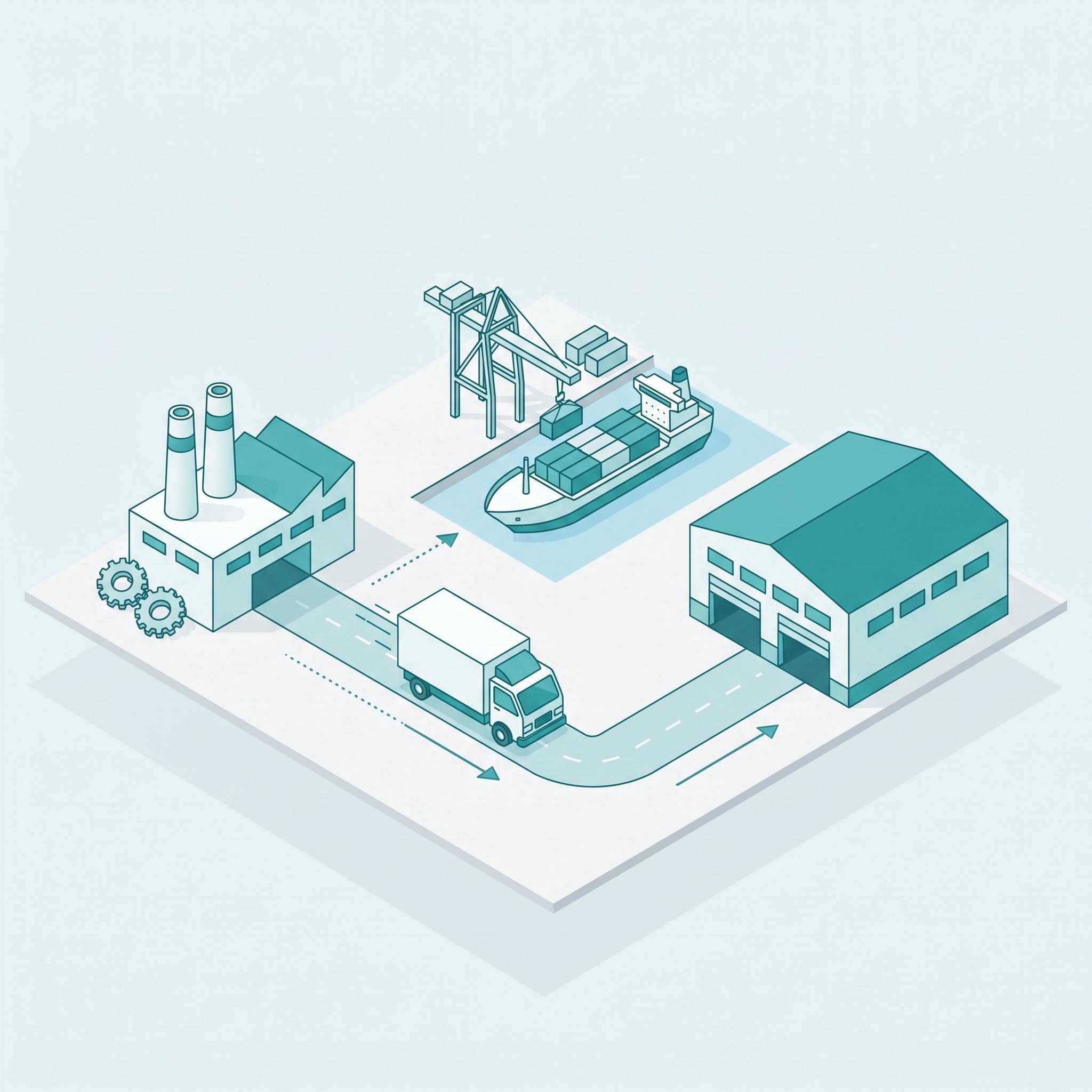
In Indian PSU tenders, delivery terms decide who pays for shipping and who takes the risk. FOR Destination means the seller pays for freight and insurance up to the buyer's gate. Ex-Works means the buyer picks up the goods from your factory. CIF means the seller pays for transport and insurance to a specific port.
TL;DR: FOR Destination is the standard on GeM and means you pay all shipping and insurance costs. Always get actual freight quotes instead of guessing, or your profit margins will vanish.
According to the latest DPIIT–NCAER Logistics Cost Assessment Framework, India's logistics costs are estimated at 7.97% of GDP. For individual GeM contracts, freight, handling, and transit insurance vary by product, distance, and delivery location. Under FOR Destination terms, underestimating these costs can significantly reduce—or even eliminate—your profit margin.
Why Delivery Terms Matter
When a PSU buys industrial parts, the price is not just the cost to make them. Buyers need to know the cost to get the parts to their site.
If you misread the rules and quote an "Ex-Works" price for a "FOR Destination" tender, your bid will be rejected. If they accept your bid but you forgot to include shipping, those costs come out of your profit.
What is a FOR Destination Tender?
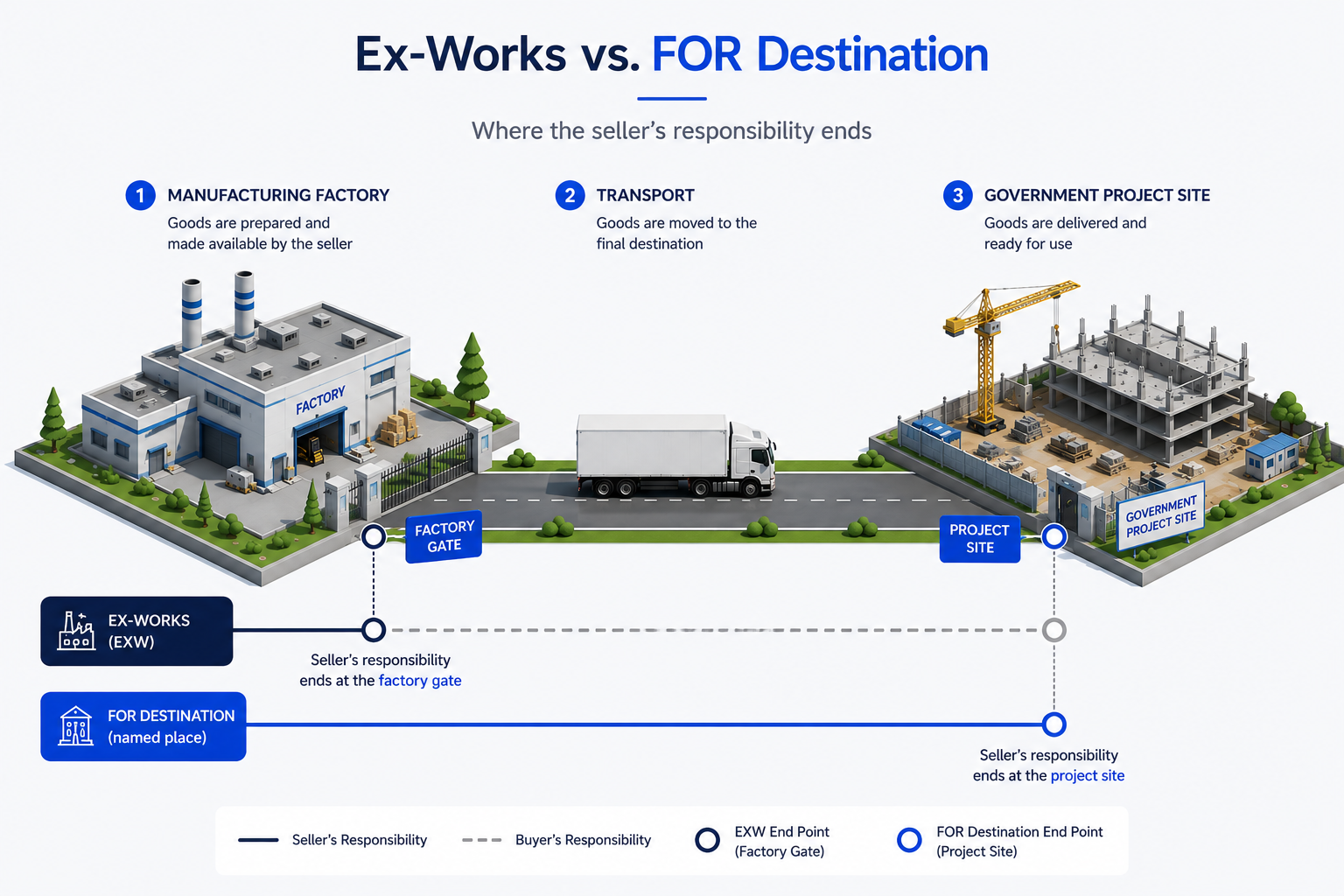
According to the Ministry of Finance's Manual for Procurement of Goods (2024), standard domestic public procurement in India is executed on a "FOR Destination" basis. On the GeM portal, this means the seller must quote an all-inclusive price. It stands for "Free on Road/Rail to Destination."
This means the seller (you) must deliver the goods to the buyer. Your quoted price must include:
The basic cost of the goods
Packing charges
Freight and transport to the site
Transit insurance for damages
The Hidden Costs
You must pay transporters and insurance companies upfront. But you cannot bill the PSU until they receive and check the goods. We recently worked with a Pune-based auto ancillary manufacturer who won a ₹2.5 crore NTPC tender, only to watch their margin evaporate because they underestimated the FOR destination freight to a remote site in Chhattisgarh by 8%. Always quote based on actual transporter estimates, never flat percentages.
Ex-Works (EXW) Meaning
Defined officially under the ICC's Incoterms 2020, Ex-Works (EXW) is the lowest-cost delivery term for the seller. You only need to pack the goods and make them available at your factory gate.
The buyer pays for pickup and shipping.
The buyer takes all risks once the goods leave your factory.
Your quote only covers making and packing the items.
Government buyers rarely use Ex-Works. You might see it in defense contracts where the government uses its own trucks.
CIF (Cost, Insurance, and Freight)
CIF is mostly for international trade or when a PSU imports parts.
You pay for the goods.
You pay for insurance during transit.
You pay for freight to a named port.
For an Indian MSME, FOR Destination works much like CIF. Both require you to pay for delivery and bear the risk.
Quick Comparison
Feature | FOR Destination | Ex-Works | CIF |
|---|---|---|---|
Who pays freight? | Seller | Buyer | Seller |
Who pays insurance? | Seller | Buyer | Seller |
Where risk transfers? | Buyer's site | Factory gate | Destination port |
How Transit Delays Tie Up Your Working Capital
A major sub-topic MSMEs ignore is the cost of delayed capital. PSU payments usually take 90 to 120 days from the date of accepted delivery. If your transport takes three weeks instead of one, you extend your cash cycle. This forces you to rely on expensive bank loans to buy raw materials for your next order.
Why You Need Proper Transit Insurance
Never skip open marine or transit insurance. Last year, one of our Metal Capital clients had a ₹40 lakh shipment rejected at a PSU gate because a minor component was damaged in transit. Because they relied on the transporter's basic liability clause instead of a dedicated transit insurance policy, they had to absorb the entire replacement cost out of pocket. Ensure your policy covers government deliveries specifically, as standard policies often have hidden rules about state-owned drop points.
Automate Your Bidding Process
Checking delivery terms on 90+ government portals takes days. OpportunityX is an AI tender platform for manufacturing MSMEs. It scans GeM, NTPC, and Railways daily to check your rules and make compliant bid documents in 10 minutes.
Once you win, OpportunityX users can access working capital loans through Metal Capital to fund raw materials and freight costs.
Calculate Your Tender Costs and Get Started Today
Key Takeaways
FOR Destination means you pay for shipping and take the risk until delivery.
Ex-Works limits your risk, but PSUs rarely offer it.
Logistics can eat up to 14% of your contract value—never guess these costs.
Transit delays directly delay your final payment from the PSU.
Frequently Asked Questions
Under FOR Destination terms, you are responsible for the goods until they reach the buyer. You must claim the loss through transit insurance and send a replacement.
Yes, Ex-Works lowers your shipping risk since the buyer handles it. However, government buyers rarely offer it on standard GeM tenders.
It usually means delivery up to the gate. Unloading is often the buyer's job unless the tender specifically asks you to pay for unloading.
No. Government contracts stick to the rules in the original bid document. Asking to change terms later can cause you to lose your Earnest Money Deposit.

QistonPe
AI-powered tender management for Indian MSME manufacturers supplying to PSU OEMs.
Also from QistonPe: Metal Capital. Order-backed raw material financing for tender wins.
© 2026 Ambition10T Innovations Private Limited
Made in India